
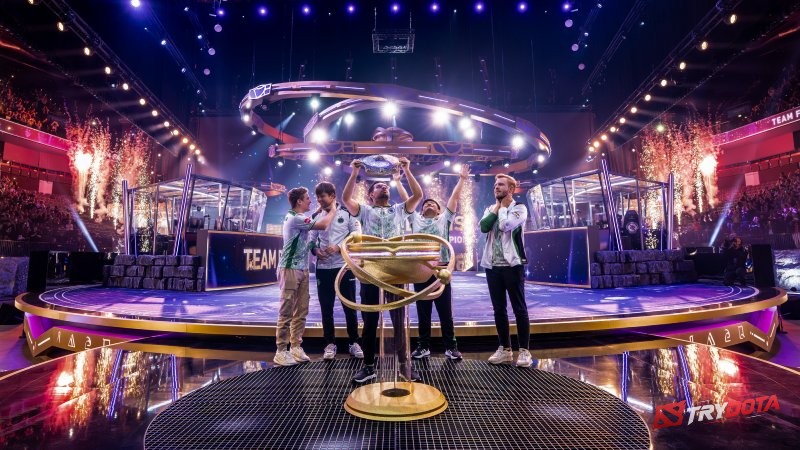
Today at BLAST SLAM IX, Team Liquid closed out its series against Xtreme Gaming with a 2:1 score. And the first thing that stood out to me was this: the match was very uneven in pace, but that’s exactly what made it interesting — one map turned into a long 64-minute slog, while the other two were taken and lost by Liquid in almost mirror-image fashion, at least in terms of feel. This wasn’t one of those matches where everything comes down to a single great late-game fight, though of course there was some of that too.
Team Liquid vs. Xtreme Gaming series
The simple fact here is that the best-of-three ended 2:1 in Team Liquid’s favor, and over the course of the match the teams managed to show very different versions of Dota. For me, in these kinds of series, the score itself matters less than how it gets there. Here, Liquid came out strong, then gave up a long and grinding second game, and in the third left their opponents with no room to respond. That’s usually a good sign for a team that can adjust quickly as the match goes on.
- Game 1: Team Liquid win, 38:21 in time, 33:12 in kills.
- Game 2: Xtreme Gaming win, 63:56 in time, 32:28 in kills.
- Game 3: Team Liquid win, 29:27 in time, 31:13 in kills.
If you look only at the numbers, Liquid’s first and third maps look like complete pace control, while the second was a long stumble that Xtreme Gaming managed to turn into a win. I think swings like that often suggest one side has a clear plan for a fast game, but in a drawn-out one problems start to surface with how they actually close the map. And yes, 63:56 is already more of a test of patience than just a game of Dota.
Game 1: Liquid quickly takes control
The first map ended in 38:21, and Team Liquid won the kill count 33:12. By draft feel, this was exactly the kind of game where a team understands the point at which it wants to break the map. Liquid had Magnus, Riki, Witch Doctor, Batrider and Windranger, while Xtreme Gaming had Rubick, Kez, Sand King, Ancient Apparition and Storm Spirit. On paper, both sides have tools for fighting, but Liquid put together a lineup that scales very nastily across the map if it gets to set the tempo first.
Liquid’s standout players were Wisper on Magnus with 5/0/6 and 654 GPM, and m1CKe on Riki with 12/2/10 and 680 GPM. And that, by the way, looks exactly like a map where the carry gets space and has no problem punishing every mistake. For Xtreme Gaming, the best KDA scores belonged to zeal on Sand King — 3/6/5 with 376 GPM — and XinQ on Rubick — 3/6/5 with 288 GPM. Those numbers make it feel like Xtreme simply couldn’t get its heroes to the point where they were truly threatening the map.
What I especially liked here was Liquid’s Magnus + Riki pairing: one provides the setup and a solid start to fights, while the other takes the tempo and turns the advantage into a full-scale map chase. Nothing especially exotic, but very practical. And that’s exactly the kind of style that feels much safer to me than flashy drafts for the sake of being flashy. Quite.
Game 2: Xtreme Gaming drags the series into a marathon
The second map became the longest of the series — 63:56 — and Xtreme Gaming took it 32:28 in kills. The draft already told a very different story here: Xtreme had Queen of Pain, Clockwerk, Windranger, Largo and Clinkz, while Liquid had Earthshaker, Kez, Jakiro, Invoker and Rubick. The game was clearly headed toward a long, tense battle where any mistake could erase the advantage completely.
For Xtreme Gaming, the best KDA came from XinQ on Windranger with 7/3/16 and 546 GPM, and Xm on Queen of Pain with 9/5/19 and 672 GPM. For Team Liquid, Wisper stood out on Invoker — 12/5/13 and 690 GPM — along with Boxi on Rubick — 1/7/23 and 276 GPM. That’s the interesting part: Liquid had very strong individual numbers on one hero, but in practice the map still went to the opponent. That often happens when one hero is carrying the economy and participation, but the overall structure of the game is already starting to fall apart in the late stages.
A long second game usually doesn’t just mean “well, it got drawn out.” It shows who plays positional Dota better, who doesn’t panic after early setbacks, and who can keep taking the map without unnecessary risk. From this match, it seems to me that Xtreme Gaming at the very least didn’t collapse after the first map and managed to force Liquid into its version of the game. And that matters more than just a pretty comeback in the standings. Although, of course, 64 minutes on a single map is entertainment for a very specific kind of viewer, to put it mildly.
Game 3: Team Liquid closes the series with no romance attached
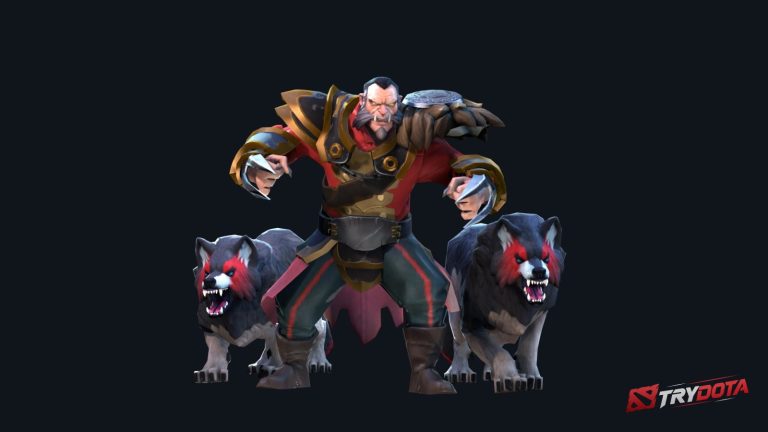
The deciding map took 29:27, and Team Liquid won it 31:13 in kills. That’s a completely different tone: short, sharp, and without any drawn-out ceremony. Liquid drafted Earthshaker, Kez, Witch Doctor, Timbersaw and Shadow Demon, while Xtreme Gaming had Lycan, Windranger, Clockwerk, Sniper and Necrophos. You can see from the hero pools that both teams were trying to assemble clear fighting tools, but Liquid, judging by the score, found the tempo better and simply started tearing the map apart faster.
Liquid’s best player was m1CKe on Kez with 8/2/12 and 710 GPM, while Malr1ne on Earthshaker added 3/2/15 with 593 GPM. For Xtreme Gaming, the most notable numbers belonged to XinQ on Windranger — 2/4/7 and 282 GPM — and zeal on Lycan — 4/5/6 with 443 GPM. The economy gap here jumps out without needing any extra interpretation: when Liquid’s carry is sitting at 710 GPM and the opponent’s key heroes aren’t close to that pace, there’s not much room left for a comfortable defense.
I think this map best explains why the series ended up 2:1 instead of being over earlier or, on the other hand, getting dragged into a 90-minute final mess. Liquid doesn’t just know how to play from ahead — it also knows how to turn that lead into the scoreboard quickly. And in the third game, that matters especially much: if you have the chance to close out a series, stretching it out is a questionable kind of fun.
What it means at the end of the day
By the end of the day, Team Liquid had taken the series over Xtreme Gaming, but the match was definitely not one-sided. Liquid’s first and third games were very convincing in both score and pace, while Xtreme Gaming answered with a long second map, where it managed to grind down its opponent in a drawn-out fight. For me, the main takeaway is this: Liquid showed it can both crush an opponent quickly and close out a series after a setback, and that’s usually much more useful than one lucky match.
I’d keep watching not just the score, but also how the teams handle draft tempo. It’s already clear here that fast, aggressive lineups can work beautifully if they aren’t allowed to free-roam. And long games, judging by the second map, are still the zone where one good combo or one successful carry scale can turn everything upside down. That’s just Dota in its usual form, and that’s probably why people keep watching it.
Source: OpenDota.
Discuss on the forum (no replies yet — be the first)

Меня тут больше всего цепляет не счет, а то, как Liquid спокойно пережила длинную вторую карту. Многие любят говорить, что такие затяжные игры случайны, но по ощущениям это как раз признак команды, которая умеет перестраиваться по ходу серии. После 63:56 уже не только драфт решает, а дисциплина и то, кто меньше ошибается.
Частично да, но там еще и темп в первой карте многое предопределил. Когда одна команда умеет быстро забирать карту, сопернику проще поймать их только в долгом матче.
Не сказал бы, что дело только в темпе
И темп, и принятие решений, без этого никуда. Просто в долгой игре ошибки обычно заметнее, вот и кажется, что все упирается в один момент.
63:56 is pure old patch energy
У мене таке було на Тінкері
О, знайома історія))) Спочатку все летить, а потім команда вирішує покормити і віддати рошана десь у лісі. Після 40-ї хвилини вже не гра, а перевірка, хто перший згадає про об’єкти.
У мене так на Воїді