
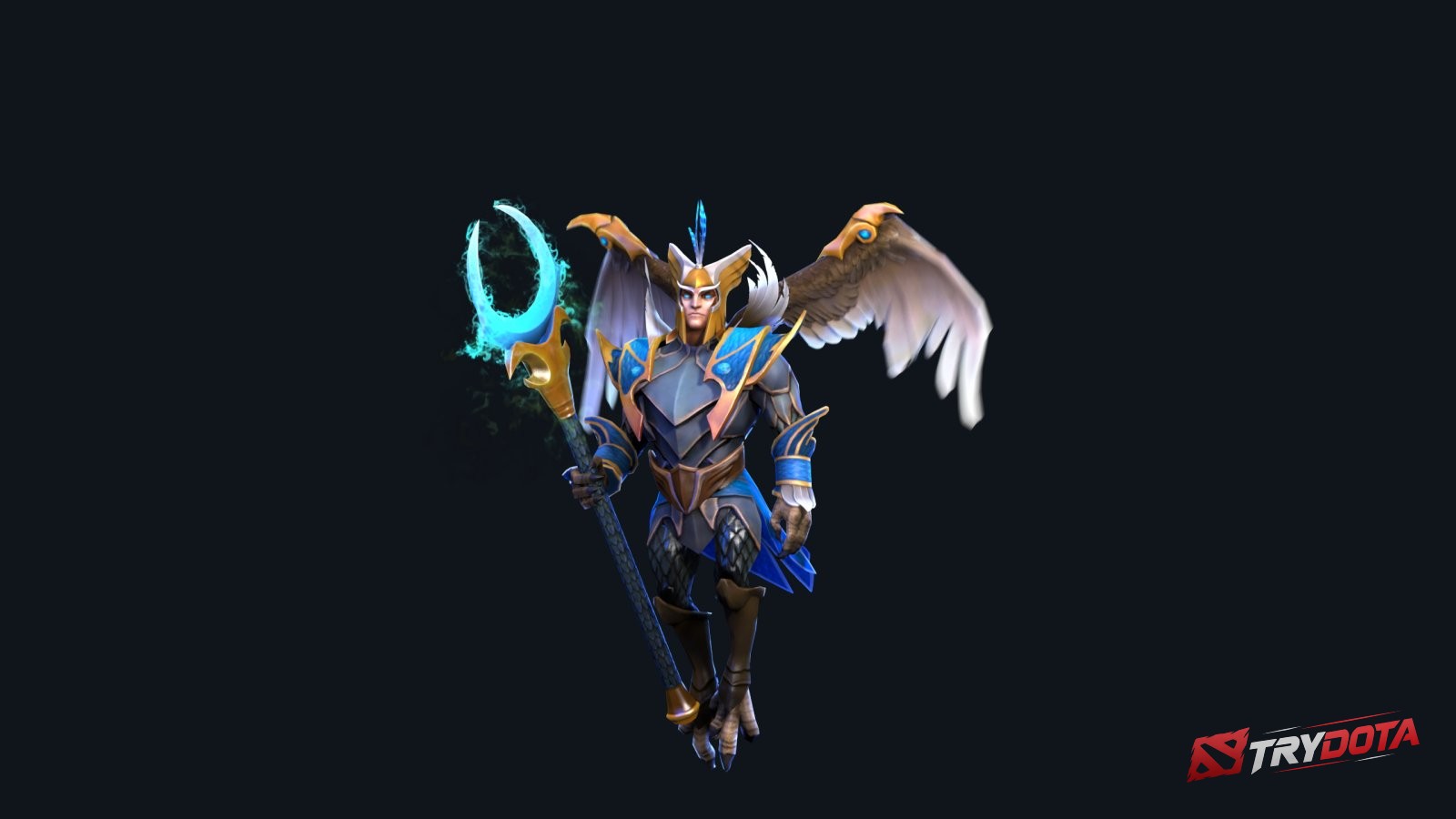
Hi! In 7.41f, I took another look at Skywrath Mage — a hero who still lives off a very simple but dangerous game plan: find a target fast, shut it out of spells, and drown it in magical damage. He’s long been seen as one of the most straightforward magic supports, but the latest patches have still shifted how he feels in game a little.
Role and abilities
Skywrath Mage is a ranged hero with intelligence as his main attribute and 1 out of 3 difficulty. In terms of roles, he most often shows up as a Support, Nuker, and to a lesser extent a Disabler. His official description captures his essence very accurately: he is deadly dangerous, but fragile, and his job is to quickly tear through enemies with volleys of powerful magic.
- Arcane Bolt — a slow burst of magical energy that deals damage based on the caster’s intelligence.
- Concussive Shot — fires at the nearest enemy hero in a large area; on hit, it deals damage and slows enemies.
- Ancient Seal — places a seal that prevents spellcasting and amplifies magical damage taken by the target.
- Shield of the Scion — innate ability: after dealing magical damage to an enemy hero with one of his abilities, Skywrath Mage gains a small magic damage barrier.
- Mystic Flare — creates a field of supernatural force that crushes enemies.
I think the combination of Ancient Seal and any follow-up magical burst is exactly what makes the hero so recognizable. He isn’t about long drawn-out fights, but about a short, brutal window where the enemy simply cannot relax. The new innate Shield of the Scion also fits that picture nicely: the hero still feels fragile, but he’s no longer completely naked once he starts dealing magic damage himself.
Changes in the latest patches
If you go from the newest versions back to the older ones, Skywrath Mage’s picture is fairly neat: he wasn’t completely reworked, but he was carefully buffed and adjusted in the way he feels in game.
- 7.41d — base Strength increased from 21 to 22.
- 7.41c — Mystic Flare cooldown reduced from 60/40/20 to 55/35/15 seconds.
- 7.41b — base mana regeneration increased by 0.25.
- 7.41 — removed the innate ability Ruin and Restoration; Shield of the Scion was added instead; also, Concussive Shot now counts a Spirit Bear as a real hero when choosing targets, and hero creeps as secondary targets.
In my view, this is a set of changes without any big fanfare, but quite useful ones. The increase to base Strength and the extra mana regen don’t make the hero feel different, but they do help him get through the early game a little more comfortably. The cooldown reduction on Mystic Flare, though, feels like the biggest change on the list: it’s the ultimate that sets the pace the most, and the more often it’s ready, the more confidently Skywrath Mage can pressure the map and join skirmishes.
Statistics
According to OpenDota, over the last 7 days in public matches Skywrath Mage had 443,757 games and a win rate of 49.9%. That’s 57th out of 127 heroes by win rate and 29th by number of games. To me, these numbers show his stability well: the hero clearly isn’t falling apart, but he doesn’t look especially outstanding in overall win rate either.
- Herald — 50.3%
- Guardian — 49.9%
- Crusader — 50.5%
- Archon — 50.1%
- Legend — 49.8%
- Ancient — 49.4%
- Divine — 49.1%
The rank spread is very even: almost everywhere, the hero sits around the 50% mark. To me, that says Skywrath Mage doesn’t depend too much on any one specific skill bracket — you can see him in lower-stakes pubs and at higher ranks alike, without dramatic dips or spikes.
In professional matches over the latest period, he had 6 picks, 1 win (16.7%), and 1 ban. Here the numbers are much more restrained, and I wouldn’t call that a strong result. With such a small sample size, it’s not worth drawing far-reaching conclusions, but the low win rate alone makes you look at his place in competitive play a bit more cautiously.
Items and matchups
According to OpenDota, Skywrath Mage’s item build in professional matches is fairly predictable: he likes to strengthen the early tempo, then add tools for control and positioning. I’d say this list makes it clear how teams usually try to unlock him.
- Starting: Iron Branch, Tango, Circlet, Blood Grenade, Observer and Sentry Wards, Mantle of Intelligence.
- Early game: Null Talisman, Boots of Speed, Staff of Wizardry, Urn of Shadows, Arcane Boots, Bottle.
- Mid game: Staff of Wizardry, Arcane Boots, Vitality Booster, Rod of Atos, Kaya, Aghanim’s Shard.
- Late game: Blink Dagger, Mystic Staff, Force Staff, Scythe of Vyse, Glimmer Cape, Kaya.
From this list, Rod of Atos, Force Staff, and Scythe of Vyse stand out to me in particular: the hero clearly values not only dealing damage, but also keeping a target inside his spell range or helping himself with positioning. At the same time, Glimmer Cape and Force Staff also highlight his fragility — without defensive and save tools, he still feels far too easy to punish.
The matchup picture in professional games is also interesting. Skywrath Mage looked best against Ancient Apparition — 65 games and 60.0% wins, against Faceless Void — 51 games and 58.8%, and against Terrorblade — 66 games and 57.6%. He struggled most against Enigma — 20.0% wins in 20 games, against Treant Protector — 27.0% in 74 games, and against Lone Druid — 28.6% in 21 games.
To me, that feels very true to the hero: he likes targets he can break down quickly with magic, and he feels noticeably worse when the enemy can survive his first jump, disrupt his tempo, or drag the fight out. Skywrath Mage almost always looks convincing when he sets the pace himself, but if the fight turns into a long and messy brawl, problems start to appear.
Conclusion
In 7.41f, I see Skywrath Mage as the same direct magic support as ever, just with a bit more comfort and a slightly smoother early game. The latest patches don’t change his essence — they just underline it: he is still about fast burst, punishing mistakes, and playing around fragile but very dangerous magic.
I think this is a hero worth keeping in mind right now if you want a clear source of magical pressure and a good way to punish isolated targets. On the numbers, he doesn’t look either too strong or a failure, and that’s exactly why he’s interesting to watch going forward: will he gradually climb after the changes, or remain a hero for narrow but very clear tasks?
Source: official Dota 2 data and OpenDota.
Discuss on the forum (no replies yet — be the first)


Be the first to discuss this…